Is foraging legal in the UK?

On nature reserves and SSSI sites there will be specific rules about what you can and can’t pick. These rules relate to particular protected species on that land, so it’s worth finding out what they are in each case. That said, they will almost certainly not be species we as foragers are interested in picking.

There are also specific named species under the Wildlife and Countryside Act 1981 which are illegal to pick.

We follow a simple code: forage only where it’s permitted, take a little from a lot (think thinning out abundance rather than clear-felling whole patches), and leave plenty for wildlife and the next person. There’s no need to be overly concerned about any negative impact you might have as a forager. Instead, I’d encourage you to focus on developing your sensitivity and awareness as you move through habitats, alongside following the guidelines above.

This is a general guide, not legal advice. If in doubt about a particular site, ask the landowner.
A seasonal foraging calendar

Foraging is a way of reading the year. Here’s roughly what to look for, season by season, across the South West, Wales and the United Kingdom.

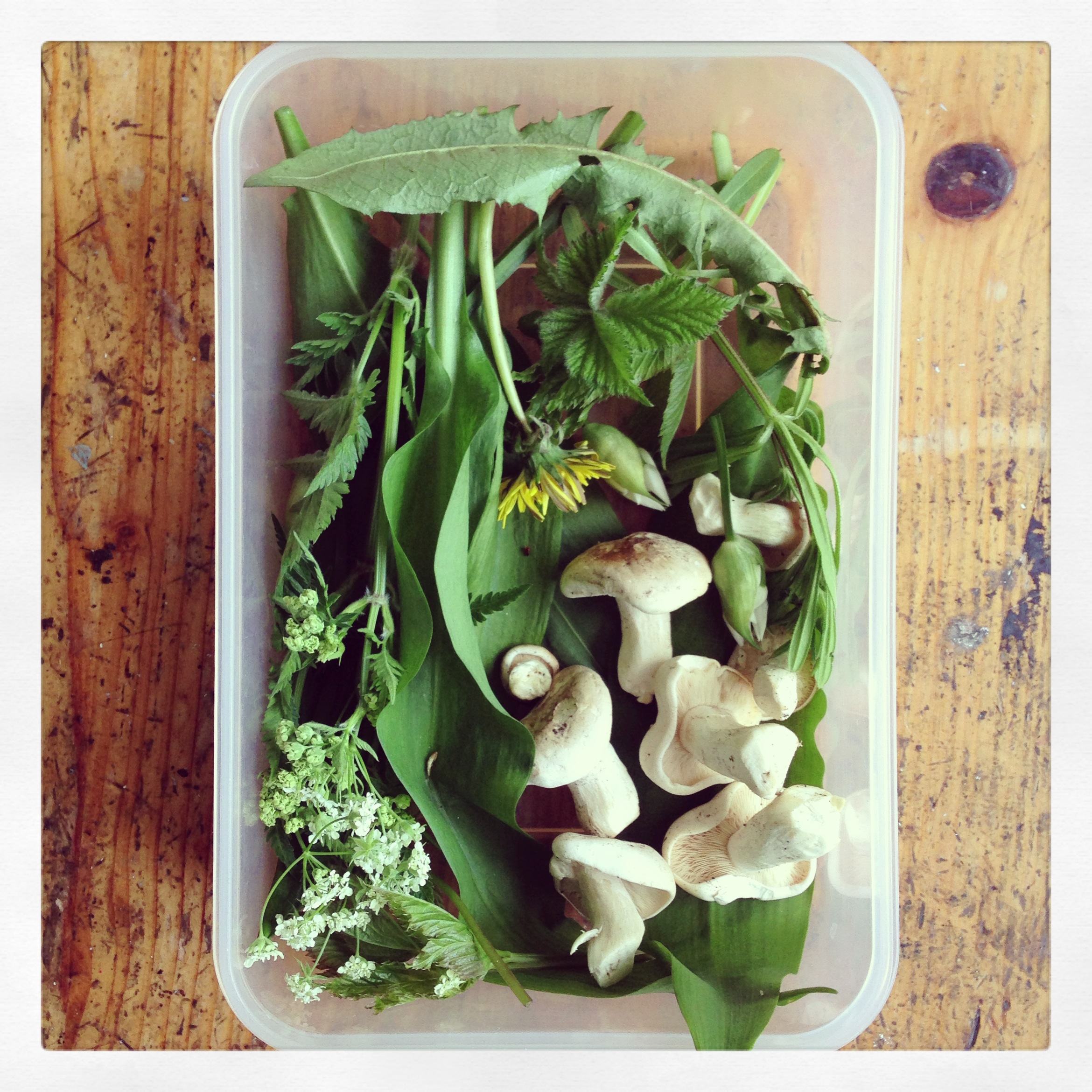
Spring is the green rush: wild garlic leaves carpet the woodland floor, with constellations of white flowers to follow; nettles, cleavers, jack-by-the-hedge and hairy bittercress are at their best, along with hawthorn leaves. Cow parsley appears too, delicious, but with dangerous lookalikes, so this is one to learn very slowly and perhaps with a guide.

Summer brings elderflower and meadowsweet, both used as medicine and for syrups and desserts; lime flowers for tea, for digestion and calm; and many of the best coastal vegetables, along the estuaries and tidal inlets.

Autumn is rich with proliferations of fungi anywhere from August right through to November and some earlier and later than this.

Winter looks bare but isn’t: roots, wood ear fungus, velvet shanks and medicinal turkey tail mushrooms, Alexanders and crow garlic leaves keep the basket going until spring comes round again. Every year is a little different, the calendar is a guide, and the hedgerow will surprise you.

Foraging safely: the golden rules

Foraging is safe when you’re honest about what you know. A handful of habits keep it that way.

The first rule is the only one that really matters: never eat anything you can’t identify with one hundred per cent certainty. “Probably” is not good enough. Use as many features as you can to confirm an identification, leaves, flowers, smell, habitat and season, not just one.

Start with species which are easier to get to know. Ones with fewer, if any, dangerous lookalikes. Leave the tricky families until later on in your journey.

Pick from clean places, away from busy roadsides, sprayed field edges and polluted water. Wash what you gather, and introduce new wild foods one at a time and in small amounts.

And ignore any “universal edibility test” you read online, it’s a myth that can seriously harm you.

Forget any assumptions or half-remembered scraps of knowledge from the past, including “it looks delicious so I’ll just try a little bit”, “other animals are eating it so it must be okay”, and “my great uncle Pete said all the mushrooms in this field are good to eat”.

The safest, fastest way to learn is to spend a day with someone who knows, then keep building slowly from there.

Mushroom identification for beginners

Mushrooms reward patience more than any other wild food. For a beginner, the goal isn’t so much to memorise a list of “edibles” as to learn how to look.

Get to know the parts: cap, gills or pores underneath, stem, and whether there’s a ring or a sac at the base. A spore print, laying a cap on paper for a few hours, reveals the spore colour, often a key clue. Note the habitat and what the mushroom is growing on, because that matters enormously. Slow down, get low to the ground, and get really curious.

Learn the dangerous species first, not last. The death cap and destroying angel are deadly and grow in Britain, so knowing exactly what they and other poisonous species look like will help keep you safe.

Begin with more straightforward species and families that have fewer toxic lookalikes, puffballs, brittlegills, chicken of the woods and wood ears are all good starting points. Treat identification apps, if you use them, as a hint, never a verdict.

Above all, come on a guided foray. An afternoon with an experienced guide will teach you more, and more safely, than a winter of books.

Coastal & estuary foraging

The Welsh and West Country coasts are one of Britain’s great wild larders, if you know how to read them.

The estuaries and rock pools are a great place to start: marsh samphire in summer, sea beet almost year-round, sea purslane, rock samphire and, lower down, seaweeds like laver, sea lettuce and dulse. Seaweeds are gathered with scissors, cutting rather than uprooting.

Shellfish are more involved and need purging. Water quality varies, so check the Environment Agency’s classification for the area, mind seasonal closures, and only ever gather from clean, well-flushed shores. Never take more than you’ll eat.

The sea itself needs respect. Always know the tide times before you set out, keep an eye on the water, and give yourself a wide margin to get back.

Time it right and a coastal forage is hard to beat: a basket full of sea vegetables, big views and memories to treasure.

Wild medicine basics

Long before the chemist, the hedgerow was the medicine cabinet, and this valuable knowledge belongs to us all. For centuries, plant medicine has been relied upon for restoring balance and keeping us well.

A few gentle, well-known allies: elderberry and rosehip for warming winter syrups, nettle as a mineral-rich tonic tea, plantain leaf rubbed on a nettle sting, and yarrow, meadowsweet and lime flower for calming infusions. Most wild medicine begins simply, as teas, oxymels, syrups and tinctures made at the kitchen table.

Care matters. Identify with certainty, gather sustainably, and remember that “natural” doesn’t mean “harmless”, wild plants are potent, may interact with medication, or might not be suitable during pregnancy.

As with foraging for food, learn gradually, one plant or mushroom at a time, paying close attention. This is a rewading journey, and one we explore gently on our wild medicine walks.

More mushrooms..

Autumn is probably the time most associated with going hunting for mushrooms. On a good day we can fill our baskets with a huge variety of delicious gourmet fungi.
Last autumn was a memorable one in this respect, but mushrooms can, in fact be found throughout most of the year if conditions are right.
St George’s mushrooms have now decided to join the party, or at least a handful of them have. The ones I’ve seen are still minuscule so they’re not ready to pick yet but they’re on their way and I’m getting more than a little bit excited at the prospect of tucking into a mushroom risotto.

IMG_5568


Winter foraging

IMG_5941


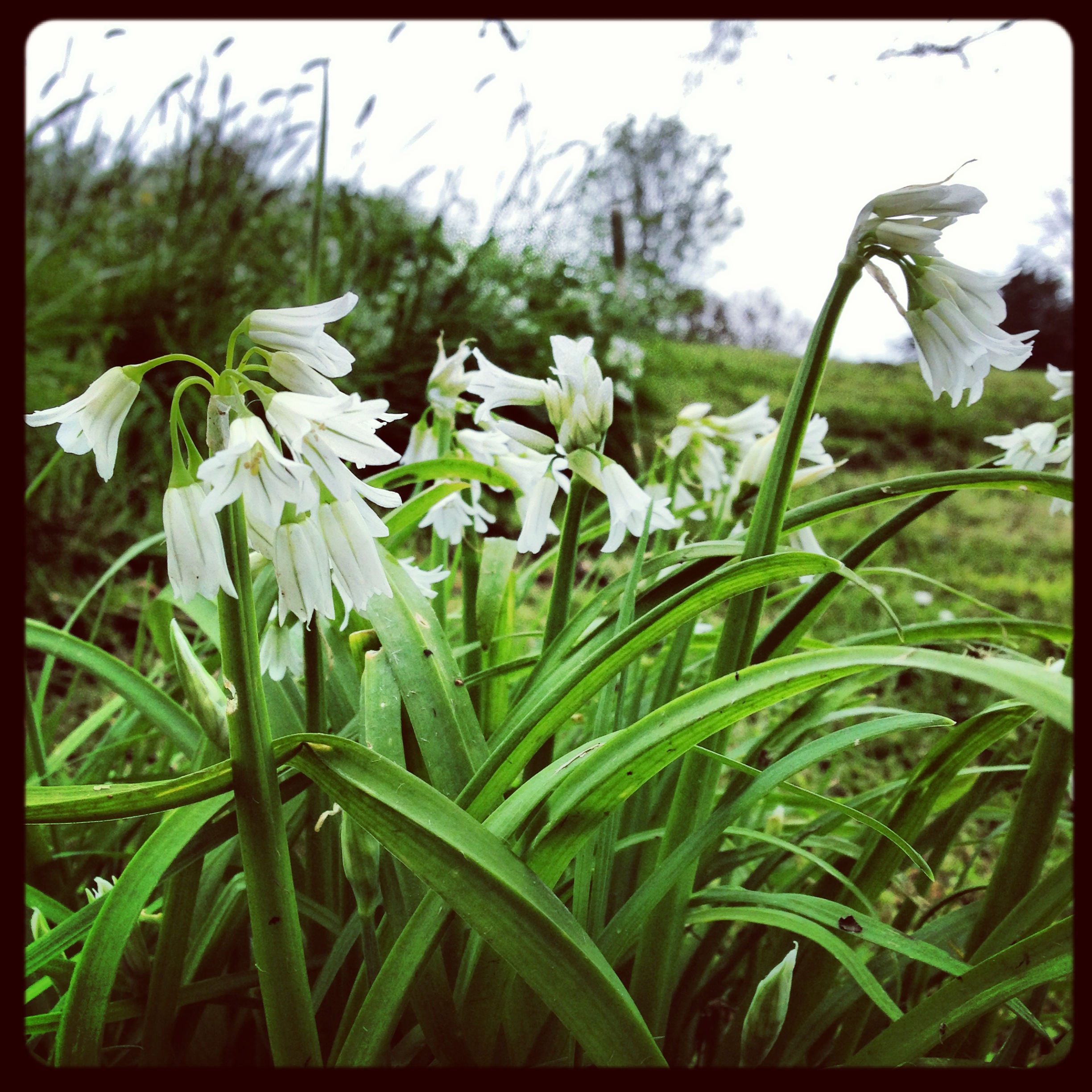
At this time of year you would be forgiven for thinking there is not a lot of wild food to be found. Not so. There is in fact an abundance of new growth occurring at the moment.  With the mild winter we’ve had so far, certain plants such as three cornered garlic (pictured above) seem to have decided it’s spring and are not only sending up new growth but are flowering.
Mushrooms too are still to be found; and not just the varieties I would expect to see in the winter months such as Oyster Mushrooms, Velvet Shanks and Winter Chanterelles but Hedgehog Fungus can also be spotted if you know where to look in your local woods.
This is a great time of year to start noting and observing young plants.  As they grow through the spring and summer you will learn what they look like at each stage of their development and in this way you will really get to know each plant.